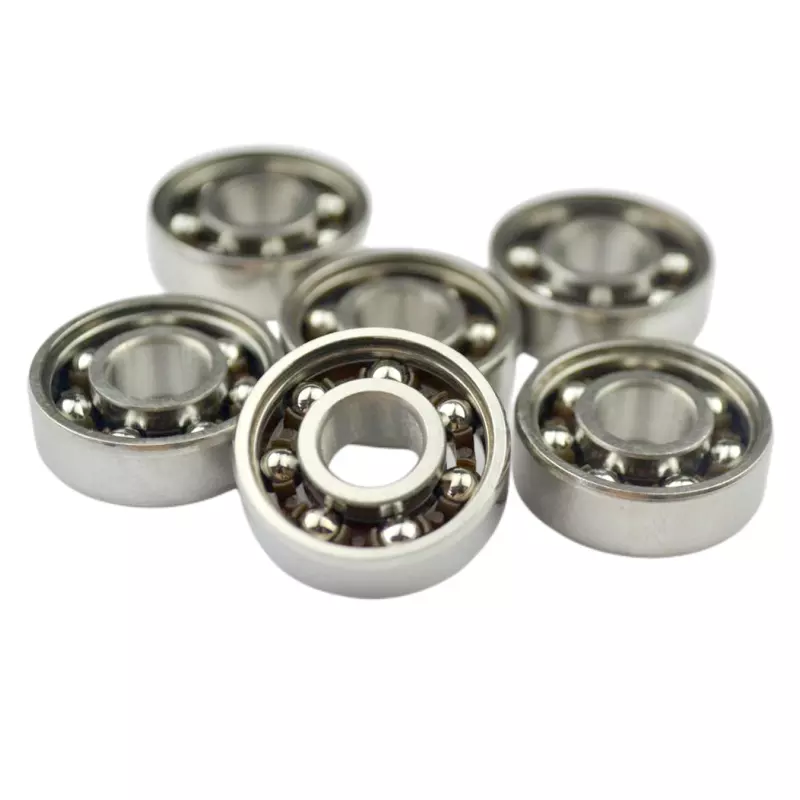
Have you ever noticed that a bearing becomes hotter shortly after adding fresh grease? While lubrication is essential for smooth bearing operation, adding more grease does not always mean better performance. In fact, improper greasing can increase friction, generate excessive heat, and potentially shorten bearing service life. Understanding the causes of bearing temperature rise after greasing can help maintenance teams prevent unexpected equipment failures and reduce downtime. 1. Excessive Grease Causes Heat Buildup One of the most common reasons for bearing overheating after lubrication is over-greasing. When too much grease is introduced into a bearing or its housing, the rolling elements must push through the excess lubricant during rotation. This creates additional churning resistance, resulting in: Increased frictional torque Higher operating temperatures Greater energy consumption Accelerated grease deterioration Potential damage to bearing components Solution: Always follow the bearing manufacturer's recommendations for grease quantity. Avoid completely filling the housing unless the application specifically requires it. Ensure that excess grease can escape through an appropriate relief or drain arrangement where the bearing housing design permits. 2. Incorrect Grease Quantity Affects Bearing Performance Both excessive and insufficient lubrication can cause problems. Too much grease increases churning losses, while insufficient grease may prevent the formation of an adequate lubricating film between rolling elements and raceways. Over-greasing can also increase pressure within certain bearing housings and potentially affect seals. Solution: Determine the correct grease quantity based on bearing type, dimensions, rotational speed, operating conditions, and housing design. Use controlled lubrication methods to prevent inconsistent grease application. 3. Uneven Grease Distribution During Startup After fresh grease is added, it may take time for the lubricant to redistribute within the bearing. During this initial running-in period, grease churning can temporarily increase friction and bearing temperature. A moderate, temporary temperature rise may be normal. However, temperatures that continue increasing or exceed specified operating limits require investigation. Solution: Where recommended by the bearing or equipment manufacturer, follow a controlled running-in procedure. Start at an appropriate reduced speed, monitor temperature, and gradually increase operating speed after the temperature stabilizes. 4. Using the Wrong Type of Grease Not all lubricating greases are suitable for every bearing application. Grease selection depends on several operating factors, including: Operating speed and load Ambient and operating temperatures Base oil viscosity Grease consistency (NLGI grade) Thickener type and additive compatibility Exposure to moisture, dust, or chemicals Using an unsuitable grease can result in excessive friction, poor lubrication, and abnormal temperature increases. Mixing incompatible greases may also affect lubricant consistency and performance. Solution: Select grease according to the bearing manufacturer's specifications and actual operating conditions. Before switching lubricants, verify compatibility or follow the recommended grease replacement procedure. 5. Improper Bearing Installation and Contamination Not every temperature increase…
Is your industrial bearing running unusually hot, making strange noises, or even producing smoke? Bearing overheating is a serious warning sign in rotating machinery. If left unaddressed, excessive heat can damage rolling elements, raceways, cages, lubricants, and surrounding components, potentially leading to costly equipment downtime. Understanding the causes of bearing overheating can help maintenance teams identify problems early, improve equipment reliability, and extend bearing service life. In this guide, we explore five common causes of bearing overheating, three warning signs to watch for, and practical steps to take when a bearing becomes dangerously hot. 1. How to Identify an Overheating Bearing Abnormal Bearing Temperature A bearing running above its normal operating temperature may indicate increased friction, poor lubrication, or excessive loading. Use an infrared thermometer, thermal camera, or installed temperature sensor to monitor bearing housing temperatures. Compare readings against the equipment manufacturer's recommended operating limits and historical temperature data. Important: There is no universal temperature limit for every bearing. Acceptable operating temperatures depend on bearing design, lubricant, speed, load, and working environment. Discolored or Degraded Lubricating Grease Lubricating grease plays a critical role in reducing friction and preventing metal-to-metal contact. Possible warning signs include: Darkened or discolored grease Unusual grease leakage A burnt smell near the bearing housing Grease contamination or changes in consistency These symptoms may indicate excessive operating temperatures or lubricant deterioration and should be investigated. Unusual Noise or Vibration Healthy bearings normally operate with relatively stable noise and vibration characteristics. Common warning sounds include grinding, squealing, or abnormal metallic noises. These symptoms may be associated with inadequate lubrication, contamination, surface damage, or incorrect installation. For accurate diagnosis, use appropriate vibration monitoring or acoustic inspection equipment. 2. Five Common Causes of Bearing Overheating Cause 1: Insufficient or Excessive Lubrication Lubrication problems are among the most frequent contributors to bearing overheating. Insufficient lubrication may cause increased friction and direct contact between rolling surfaces. However, excessive grease can also create problems. Overgreasing increases churning resistance, particularly at higher rotational speeds, generating additional heat inside the bearing assembly. Recommended Solution: Select the correct lubricant for the operating conditions and follow the equipment manufacturer's lubrication quantity and interval recommendations. Cause 2: Excessively Tight Fits or Insufficient Internal Clearance Bearing internal clearance is essential for accommodating operating conditions, including thermal expansion. If the interference fit is excessively tight or the initial clearance is insufficient, the bearing may develop excessive internal loading during operation. This increases friction, heat generation, and the risk of premature failure. Recommended Solution: Check shaft and housing dimensions, verify the required fit tolerances, and select the appropriate bearing internal clearance according to the application. Cause 3: Excessive Bearing Preload Preload is commonly used in applications involving angular contact ball bearings…
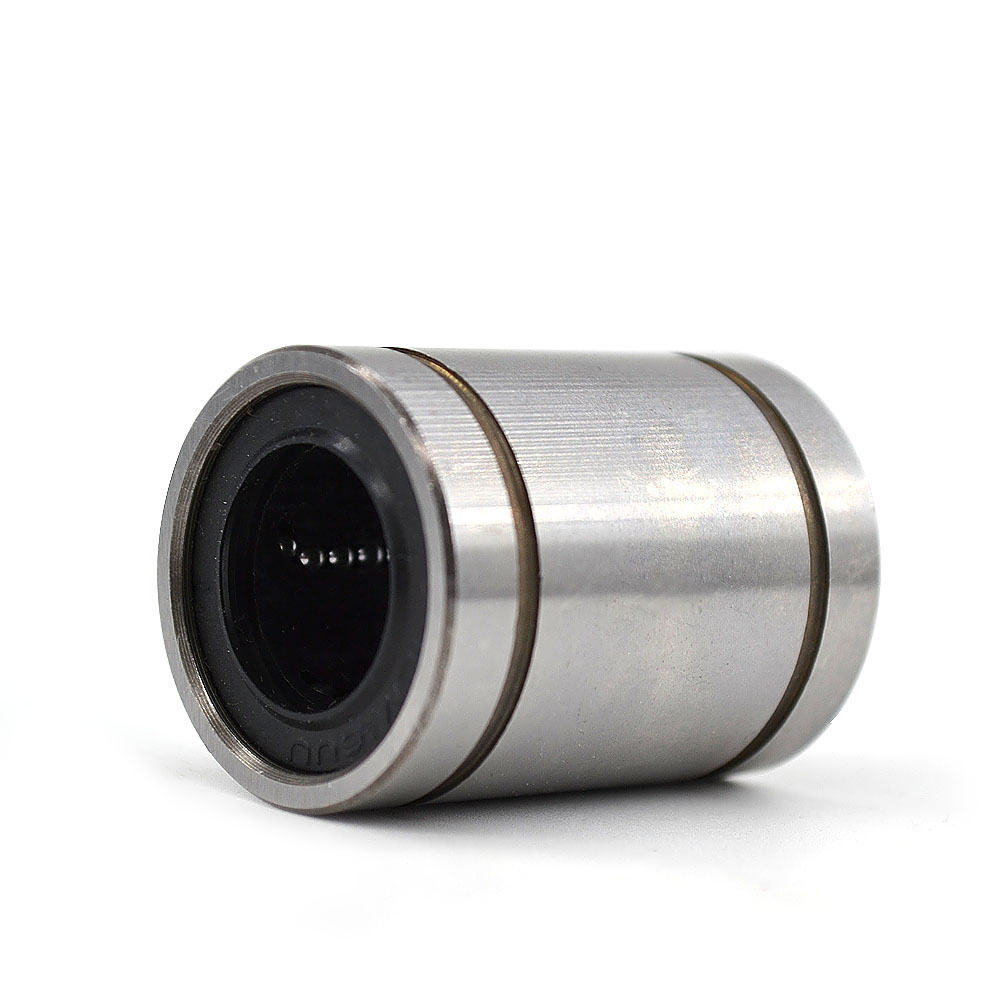
Linear bearings are essential components in many industrial motion systems. They allow machinery to move smoothly along a straight path while reducing friction between moving parts. From automated production lines to packaging equipment and precision instruments, linear bearings help support efficient and reliable mechanical movement. But have you ever wondered how these small yet important components are manufactured? Producing a high-quality linear bearing involves more than simply shaping a piece of metal. It requires suitable materials, controlled heat treatment, precision machining, careful assembly, and consistent quality inspection. In this article, we explore the key stages of the linear bearing manufacturing process and explain how each step contributes to product performance. 1. Material Selection: The Foundation of Bearing Quality The manufacturing process begins with selecting suitable materials for the bearing components. A typical recirculating ball-type linear bearing consists of several important parts, including: Outer sleeve Steel balls Ball retainer or cage End seals, depending on the design Each component has different performance requirements. For example, bearing-grade chromium steel is commonly used for the outer sleeve because of its hardness, strength, and wear resistance after appropriate heat treatment. Stainless steel may also be used in certain bearing designs where corrosion resistance is important. The steel balls must provide consistent dimensions, suitable hardness, and a smooth surface to support reliable rolling motion. Meanwhile, the retainer may be manufactured from engineered polymers or metal, depending on operating temperature, load conditions, and product design. Why does material selection matter? Choosing appropriate materials helps achieve: Better wear resistance Consistent mechanical performance Improved dimensional stability Reliable operation under intended working conditions Longer service life when correctly installed and maintained The correct material combination depends on the bearing's application rather than a single universal specification. 2. Forming and Initial Machining: Creating the Bearing Components Once the materials have been selected, the next stage involves forming or machining the individual bearing components. Depending on the product structure and production method, manufacturers may use processes such as cold forming, cutting, turning, or other metalworking operations. For the outer sleeve, the goal is to produce the required basic shape while leaving appropriate machining allowance for later finishing operations. During this stage, manufacturers pay attention to several important factors: Inner and outer dimensions Wall thickness consistency Component geometry Surface condition Material integrity Accurate initial processing helps reduce errors during subsequent manufacturing steps. It also creates a stable foundation for precision finishing. Different linear bearing types may require different production methods. Therefore, the manufacturing route for a standard linear ball bushing may not be identical to that of a flanged or specially designed linear bearing. 3. Heat Treatment: Improving Hardness and Wear Resistance Heat treatment is one of the most important stages in…
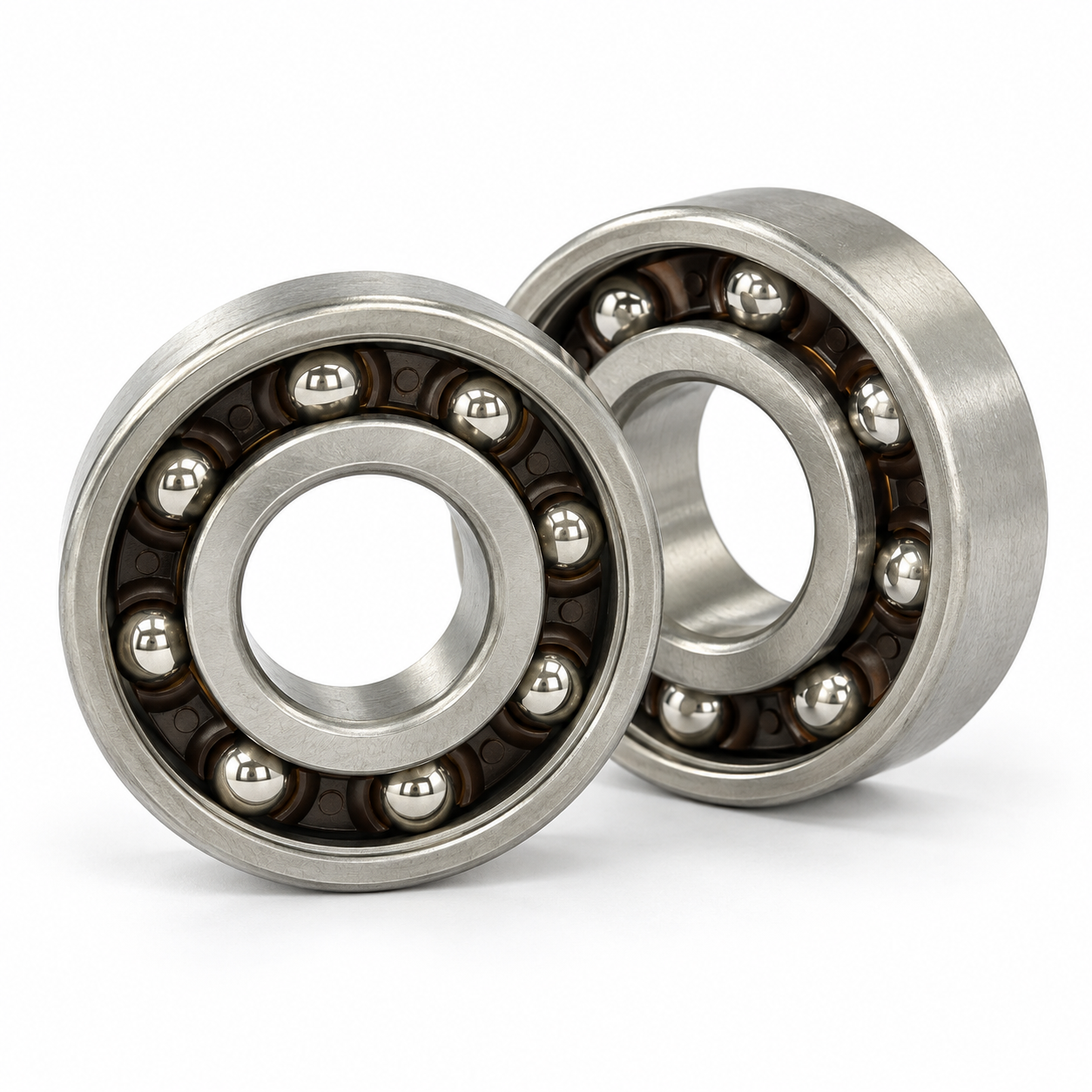
When people think about bearing lubrication, oil and grease usually come to mind first. But for some high-speed and precision applications, there is another solution: gas bearings. Instead of relying on conventional lubricants, gas bearings use air, nitrogen, or other gases to create an extremely thin film between the rotating shaft and the bearing surface. This gas film works like an invisible cushion, helping reduce direct contact between moving components. So, what are the advantages? Lower Friction Gas has a much lower viscosity than most liquids, which helps reduce friction and energy loss during high-speed operation. Suitable for High-Speed Applications With less resistance between moving surfaces, gas bearings can perform well in systems that require very high rotational speeds. High Precision Because direct mechanical contact can be minimized, gas bearings are well suited for precision equipment where smooth motion, low vibration, and accuracy are important. Oil-Free Operation In certain applications, eliminating conventional lubricants can help reduce contamination, maintenance requirements, and lubricant-related losses. The basic idea behind a gas bearing is simple: Instead of making two metal surfaces slide more efficiently, the goal is to keep them from touching as much as possible. That is why gas bearing technology continues to play an important role in high-speed rotors, precision machinery, measuring equipment, and other advanced industrial systems. Sometimes, the next step in bearing technology is not finding a better lubricant. It is asking a different question: What if we do not need oil at all? What do you think about gas bearings? Would you consider an oil-free bearing solution for high-speed applications? #GasBearing #AirBearing #BearingTechnology #MechanicalEngineering #PrecisionEngineering #HighSpeedMachinery #IndustrialTechnology #Engineering #OilFree #Bearings

Deep Groove Ball Bearing Vibration Grades: How to Choose Between Z1, Z2 and Z3 When purchasing deep groove ball bearings, buyers usually focus on bore diameter, dimensional tolerance, clearance, load rating and material. But there is another specification that can have a major impact on the final performance of rotating equipment: bearing vibration level. A bearing may meet all dimensional requirements and still create excessive noise or vibration during operation. For applications such as electric motors, pumps, fans, gearboxes and precision machinery, understanding bearing vibration grades can therefore make a significant difference in both equipment performance and product consistency. What Does Bearing Vibration Actually Tell You? Bearing vibration is not simply a measure of how “quiet” a bearing is. It can also provide information about the overall quality of the bearing manufacturing and assembly process. Excessive vibration may be associated with factors such as: Raceway surface irregularities Rolling element quality Manufacturing deviations Contamination or foreign particles Improper assembly Surface defects Internal geometry variation Lubrication-related issues This is why vibration testing is widely used as an important quality-control step for precision bearings. In simple terms, vibration testing can help answer one key question: Is the bearing running as smoothly as it should? Z1, Z2 and Z3: What Is the Difference? For deep groove ball bearings, vibration grades such as Z1, Z2 and Z3 are commonly used to classify vibration performance. The important point is that these grades should not be interpreted independently from the applicable standard, bearing size and testing conditions. Generally speaking: Z1 – Standard vibration performance for general applications Z2 – Lower vibration and improved running smoothness Z3 – Higher-grade vibration control for more demanding applications As the vibration grade becomes more stringent, the allowable vibration level becomes lower. However, choosing Z3 does not automatically mean that it is the best choice for every application. The correct grade depends on the machine, operating speed, noise requirements, application environment and overall cost target. Z1 vs. Z2 vs. Z3: Which One Should You Buy? There is no universal answer. A better approach is to select the vibration grade according to the actual application. Z1 – General Industrial Applications Z1 can be suitable for applications where extremely low noise and vibration are not critical. Typical examples may include: General machinery Basic conveyor systems Agricultural equipment Standard industrial equipment Applications with relatively low sensitivity to vibration For cost-sensitive projects, Z1 may provide an economical solution when the application does not require tighter vibration control. Z2 – A Practical Choice for Many Applications Z2 offers a higher level of vibration control and is often a practical choice for equipment where smooth operation and noise reduction are important. It can be considered for applications such…
Alumina Ceramic Balls vs. Zirconia Ceramic Balls: Differences, Advantages, and Application Recommendations Ceramic balls are widely used in grinding, bearings, valves, pumps, chemical equipment, precision machinery, and other industrial applications. Compared with metal balls, ceramic balls offer excellent wear resistance, corrosion resistance, electrical insulation, and dimensional stability. Among various ceramic materials, alumina ceramic balls and zirconia ceramic balls are two of the most commonly used options. However, many buyers ask: “Which one is better?” The answer is simple: neither is always better. The right choice depends on the working environment. 1. Material Difference Alumina ceramic balls are mainly made of aluminum oxide, Al₂O₃. They are known for high hardness, good wear resistance, corrosion resistance, electrical insulation, and cost efficiency. Alumina balls are suitable for many general industrial applications where stable performance and economical pricing are important. Zirconia ceramic balls are mainly made of zirconium oxide, ZrO₂. They offer higher toughness, better impact resistance, higher density, and excellent wear performance. Zirconia balls are often selected for high-load, high-precision, and demanding working conditions. In simple terms: Alumina ceramic balls are a cost-effective solution for wear and corrosion resistance. Zirconia ceramic balls are a premium solution for toughness, precision, and long service life. 2. Key Performance Comparison Item Alumina Ceramic Balls Zirconia Ceramic Balls Main Material Al₂O₃ ZrO₂ Hardness High High Toughness Medium, relatively brittle Higher toughness Impact Resistance Moderate Better Wear Resistance Excellent Excellent, especially under high load Density Lower Higher Corrosion Resistance Excellent Excellent Electrical Insulation Excellent Good Cost More economical Higher cost Best For Grinding media, fillers, wear-resistant parts, insulation parts Precision bearings, valve balls, high-end grinding, high-impact applications 3. Advantages of Alumina Ceramic Balls High hardness and good wear resistance Alumina ceramic balls are suitable for ball mills, grinding equipment, mixing systems, wear-resistant components, and ceramic raw material processing. For general powder grinding, mineral processing, ceramic production, and chemical packing applications, alumina is often the more economical choice. Excellent corrosion resistance Alumina ceramic balls provide good chemical stability and corrosion resistance. They can be used in many chemical environments involving acids, alkalis, solvents, and other corrosive media. Excellent electrical insulation Due to their strong electrical insulation properties, alumina ceramic balls are often used in electronic, electrical, high-voltage, and insulating applications. Better cost performance When the working condition does not involve strong impact or extremely high load, alumina ceramic balls offer a good balance between performance and cost. They are especially suitable for large-volume applications. 4. Advantages of Zirconia Ceramic Balls Higher toughness and better impact resistance Compared with alumina, zirconia is not only hard but also tougher. It has better resistance to cracking, chipping, and impact damage. This makes zirconia ceramic balls suitable for high-load, high-vibration, and frequent start-stop…
Revolutionizing Performance: The Power of Ceramic Balls in Bearings In the demanding world of precision engineering, every component matters. At BearingTech, we are pushing the boundaries of performance and reliability by integrating advanced ceramic balls into our bearing solutions. But what makes them so special, and where do they truly shine? Ideal Application Environments: Ceramic balls, typically made from silicon nitride (Si₃N₄), excel in extreme conditions where traditional steel balls may falter: High-Speed Operations: Perfect for machine tool spindles and turbochargers where reduced centrifugal force and lower mass are critical. High-Temperature Settings: Stable in environments exceeding 1000°F (540°C), ideal for aerospace and furnace applications. Corrosive & Chemically Harsh Atmospheres: Inert to most chemicals, making them suitable for chemical processing, marine, and medical equipment. Electrically Sensitive or Non-Magnetic Applications: Excellent electrical insulators and non-magnetic, essential for MRI machines, semiconductors, and specific electrical instruments. Dry or Lubrication-Scarce Situations: Lower friction coefficient allows for better performance where lubrication is minimal or undesirable. Key Benefits & Functions: The switch to ceramic balls transforms bearing performance by delivering: Reduced Friction & Heat Generation: Up to 40% less friction than steel, leading to cooler running, lower energy consumption, and potentially higher speeds. Enhanced Stiffness & Hardness: Superior rigidity improves system accuracy, while extreme hardness (Rockwell 78-80) dramatically increases wear resistance and service life. Lower Density & Mass: About 40% the weight of steel, reducing centrifugal load, especially at high RPMs, which decreases stress on rings and cages. Minimal Thermal Expansion: Maintains precise clearances and preload stability across a wide temperature range, ensuring consistent precision. The Result? Bearings equipped with our ceramic balls offer unparalleled durability, precision, and efficiency. They enable longer maintenance intervals, reduced downtime, and superior performance in the most challenging applications—from electric vehicles and wind turbines to high-end cycling and robotics. Ready to upgrade your application's potential? Explore how BearingTech's ceramic hybrid bearings can be the solution for your next-generation designs. Visit our or contact our engineering team for a consultation. #BearingTech #CeramicBearings #EngineeringExcellence #HighPerformance #Innovation #Si3N4 #PrecisionEngineering #IndustrialSolutions #AdvancedMaterials #Reliability
Ceramic Balls in Bearings: Where They Win (and Why) If you’re sourcing bearing components for high-speed, high-temperature, or corrosive environments, ceramic balls are one of the most effective upgrades versus standard steel balls—especially in hybrid bearings. Key Advantages of Ceramic Balls (Si3N4 / ZrO2) 1) Higher speed capability Ceramic balls are lighter than steel, which reduces centrifugal force and skidding at high RPM. Result: cooler running + better stability in high-speed spindles and motors. 2) Superior wear resistance & longer service life Their high hardness and smooth surface finish help reduce wear on raceways, improving bearing life in demanding duty cycles. 3) Better performance in poor lubrication Ceramics generate less friction and are less prone to adhesive wear, making them more tolerant in starved lubrication or intermittent lubrication conditions. 4) Corrosion resistance Ceramics don’t rust like steel. This is a big deal in chemical exposure, moisture, washdown, and marine conditions. 5) Electrical insulation Ceramic balls can prevent electrical pitting and fluting caused by stray currents—common in VFD-driven motors, EV systems, and generators. 6) High-temperature stability Ceramics maintain hardness and dimensional stability at elevated temperatures better than standard bearing steel, supporting hot-running equipment. Best Use Environments (Where Ceramic Balls Make Sense) ✅ High-speed rotation Machine tool spindles Turbo machinery High-speed dental/medical devices ✅ Electric current risk VFD motors EV traction motors Generators / wind turbines ✅ Corrosive or wet exposure Food & beverage washdown zones Chemical processing equipment Marine applications ✅ High temperature / thermal cycling Ovens, dryers, heat treatment conveyance High-temp pumps and fans ✅ Low lubrication / clean rooms Vacuum equipment Semiconductor manufacturing tools Precision automation with limited grease Quick Note for Buyers (Cost vs. Value) Ceramic balls cost more upfront, but the ROI shows up when you need: fewer failures reduced downtime lower operating temperature better speed and corrosion performance For standard loads and mild environments, steel may still be the most cost-effective. But in harsh conditions, ceramics are often the smarter long-term play. Looking for Si3N4 ceramic balls (common for hybrid bearings) or ZrO2 options for specific requirements?Share your size, grade, quantity, tolerance, and application environment, and suppliers can match the right spec quickly. #ceramicballs #bearingcomponents #hybridbearings #Si3N4 #ZrO2 #bearings #industrialprocurement #BearingNet
Bearings That Win Business: A Practical Guide to Choosing the Right Bearing Solution (and Supplier) In a world where machines are expected to run faster, quieter, and longer—with less downtime—bearings are no longer “standard parts.” They’re performance parts. The right bearing choice can reduce energy loss, extend service intervals, protect gearboxes and motors, and keep production lines moving. The wrong choice can quietly turn into vibration, heat, early failure, warranty claims, and lost trust. This article breaks down what modern buyers and engineers really need to know: where the bearing industry is heading, how to select the right bearing for your application, and how to evaluate a bearing supplier for long-term reliability—not just the lowest unit price. 1) The Bearing Industry Is Evolving—Fast Global manufacturing is shifting toward higher precision and higher expectations. Several trends are pushing bearing requirements upward: Electrification & High-Speed Motors EV powertrains, e-mobility, and high-speed industrial motors demand bearings with: lower noise and vibration (NVH) tighter tolerances improved cage stability at high RPM better grease performance and temperature control Automation & Robotics Robots and automated lines require consistent accuracy and repeatability. Bearings must deliver: predictable rotational torque stable preload performance long fatigue life under frequent start-stop motion Wind Power & Heavy Industry Reliability Wind turbines, mining equipment, and steel mills operate under extreme loads and harsh conditions. Bearings need: advanced heat treatment and material cleanliness improved sealing against contamination robust lubrication strategies Predictive Maintenance More customers now monitor vibration, temperature, and noise. Bearings must be consistent from batch to batch—because variation becomes a “data alarm.” Bottom line: the market is moving from “commodity bearing supply” to “application-driven bearing solutions.” 2) What Customers Really Buy: Uptime Procurement teams often compare unit prices. Engineers compare performance. But leadership cares most about one metric: total cost of ownership (TCO). A bearing that lasts 20% longer or reduces downtime by one unplanned shutdown can outweigh a small price difference. That’s why best-in-class buyers evaluate bearings by: Service life (fatigue + wear + lubrication stability) Consistency (batch-to-batch variation control) Noise and vibration (especially for motors, HVAC, appliances, and EV components) Delivery stability (short lead time + reliable supply chain) Technical support (right bearing selection, failure analysis, improvement plan) 3) Bearing Selection: Start With “Is It the Right Type?” Before “Why It Failed” A lot of failures aren’t caused by “bad bearings.” They’re caused by mismatch: wrong bearing type, wrong internal clearance, wrong sealing, wrong grease, wrong fit, wrong installation. Here’s a practical selection framework: Step A — Define the Load and Motion Ask: Is the load primarily radial, axial, or combined? Is the load steady or shock/impact? Does the shaft misalign? Is it high-speed, low-speed, or frequent start/stop? Quick matching guide:…
How to choose a best bearing suppliers/manufacturer? When choosing a bearing supplier, you need to consider a number of aspects to ensure that you choose the best solution: Quality: The primary consideration is to ensure that the bearings meet industry standards, which can be verified by inspecting samples and technical specifications. Price and cost: Compare prices from different suppliers while considering overall cost-effectiveness, including hidden costs. Delivery capability: Evaluate the supplier’s delivery time and supply capabilities to ensure on-time delivery. Service: Choose a supplier that provides high-quality service and professional technical support so that you can get timely help during use. Technical capabilities: Examine the supplier’s technical capabilities, especially for special or high-precision bearing requirements. Customer reviews: Refer to other customers’ reviews and recommendations to understand the supplier’s reputation. Based on the above factors, choose the bearing supplier that best suits your needs.

Artificial intelligence (AI) has several applications in the field of bearings, bringing significant benefits to bearing manufacturing, maintenance, and performance optimization. Here are some of the main applications: 一、Manufacturing process 1.Quality control: --AI-powered vision systems can inspect bearings for defects such as cracks, scratches, and dimensional inaccuracies with high precision. For example, convolutional neural networks (CNNs) can be trained to recognize different types of defects by analyzing images of bearings taken during the production line. --By quickly identifying defective products, manufacturers can reduce waste, improve product quality, and increase production efficiency. 2.Process optimization: --AI algorithms can analyze large amounts of production data to optimize manufacturing processes. For instance, they can determine the optimal parameters for machining, heat treatment, and assembly to ensure the best possible bearing performance. --This helps in reducing production costs, improving product consistency, and enhancing the overall competitiveness of bearing manufacturers. 二、Condition monitoring 1.Predictive maintenance: --By continuously monitoring various parameters such as vibration, temperature, and noise, AI-based systems can predict the remaining useful life of bearings. This allows maintenance teams to schedule maintenance activities in advance, reducing downtime and avoiding unexpected failures. --For example, machine learning algorithms can analyze historical data and real-time sensor readings to identify patterns that indicate impending bearing failures. 2.Fault diagnosis: --AI can diagnose different types of bearing faults accurately. By analyzing vibration signals, for instance, it can distinguish between faults such as inner race defects, outer race defects, and ball defects. --This enables maintenance personnel to take targeted actions to repair or replace the faulty bearings, minimizing the impact on production. 三、Performance optimization 1.Load prediction and optimization: --AI can analyze the operating conditions of machinery and predict the loads on bearings. This information can be used to optimize the design and selection of bearings, ensuring they are capable of handling the expected loads and improving their service life. --For example, in industrial applications where the load on bearings varies over time, AI-based load prediction can help in selecting the right type of bearing and adjusting operating parameters to minimize wear and tear. 2.Energy efficiency improvement: --By optimizing the operation of machinery and reducing friction in bearings, AI can contribute to energy savings. For instance, AI-powered control systems can adjust the speed and torque of motors to minimize the power consumption while maintaining the required performance. --This is particularly important in applications where energy costs are a significant concern, such as in large industrial plants. In conclusion, the application of AI in bearings offers numerous advantages in terms of quality control, maintenance, and performance optimization. As AI technology continues to advance, it is expected to play an even more significant role in the bearing industry, leading to more reliable, efficient, and cost-effective solutions.

How to choose a best bearing suppliers/manufacturer? When choosing a bearing supplier, you need to consider a number of aspects to ensure that you choose the best solution: Quality: The primary consideration is to ensure that the bearings meet industry standards, which can be verified by inspecting samples and technical specifications. Price and cost: Compare prices from different suppliers while considering overall cost-effectiveness, including hidden costs. Delivery capability: Evaluate the supplier's delivery time and supply capabilities to ensure on-time delivery. Service: Choose a supplier that provides high-quality service and professional technical support so that you can get timely help during use. Technical capabilities: Examine the supplier's technical capabilities, especially for special or high-precision bearing requirements. Customer reviews: Refer to other customers' reviews and recommendations to understand the supplier's reputation. Based on the above factors, choose the bearing supplier that best suits your needs. 1. Key points for selecting suppliers 1. Quality It is crucial to find a high-quality bearing supplier. To ensure that the quality of the bearing meets the requirements, in order to ensure the safety and efficiency of production. You can check the samples, technical specifications and currently delivered products provided by the supplier to ensure that the product is authentic and reliable. At the same time, you can also ask some companies that have cooperated to understand their experience and opinions. 2. Price Taking into account the cost factor, price is also an important factor in selecting suppliers. Through market research, find suppliers with suitable prices, but also need to pay attention to the hidden costs in the price. Such as whether there is a minimum order quantity, whether you need to pay an advance payment, and whether you need to bear additional costs. 3. Delivery deadline The delivery deadline is also a factor to consider when selecting a supplier. In the short term, some companies need to complete production tasks in a shorter period of time, which requires suppliers to deliver in time. When selecting a supplier, you also need to consider the delivery time and place to avoid problems in the delivery link. 4. Service Finally, choosing a reliable bearing supplier also requires considering the service. High-quality service can reduce problems in communication, formulation, distribution and other links. Not only that, if you encounter some problems during the use of the product, a reliable supplier can also provide you with more efficient technical support. …

Bearings play a pivotal role in ensuring the smooth operation of various machinery, including skateboards. Cleaning these tiny components not only boosts their performance but also prolongs their lifespan. In this guide, we'll zero in on how to clean bearings, especially those in skateboards. Determine whether the bearing needs to be cleaned: 1.Observe the grease residue: After cleaning, carefully observe the grease residue in the inner and outer ring raceways, rolling elements and cage gaps of the bearing. Use a clean feeler gauge to scrape out the grease, apply it to the fingertips and rub it. If there is a rustling sound, it means that the bearing is not clean and needs to be cleaned again. 2.Check the running flexibility: After cleaning, pinch the inner ring of the bearing and turn the outer ring to make it rotate horizontally. If the running process is flexible, without obstruction or jumping, it means that the cleaning is qualified. 3.Understand the importance of cleanliness: Cleanliness is an important factor affecting the performance and service life of bearings. Regular cleaning can reduce wear, extend service life, and ensure safe operation of equipment. In summary, by observing the grease residue, checking the running flexibility and understanding the importance of cleanliness, you can determine whether the bearing needs to be cleaned. Regular cleaning and maintenance are essential to maintain the best performance and extend the service life of bearings. To clean skateboard bearings, follow these steps: 1. Disassemble the bearing ●Use a skateboard tool or wrench to remove the nut, move the wheel with the bearing to the end of the bracket, and use the lever principle to remove the bearing pry it out. 2.Bearing Disassembly ●For rubber sealed bearings, gently use a razor blade, thumbtack, or safety pin. Ensure you don't deform the seal to avoid friction upon reassembly. Safely store the seals in your hardware tray. 3. Deep cleaning ●Put the bearing into the jar, pour an appropriate amount of bearing cleaner (or high-purity alcohol, gasoline and other substitutes), and soak for 10 minutes bell. Shake the jar after soaking to help clean remaining stains. 4. Drying and lubrication ●Take out the bearing, wipe it dry with paper towels, and use a hair dryer to dry it if necessary. After drying, add appropriate lubricant to the bearing lubricant. 5. Reinstall. ●Insert the dust cover back into the bearing and install the bearing back onto the wheel.After following these steps, your skateboard bearings should return to good performance. Conclusion: Regular maintenance not only prolongs the life…

Skateboard bearings are an important part of skateboards. Their main function is to connect the wheels and brackets to ensure that the wheels can rotate smoothly. The design and material of skateboard bearings have an important impact on their performance. [video width="2120" height="1080" mp4="https://www.xzballbearing.com/wp-content/uploads/2024/11/11月20日.mp4"][/video] Basic components of skateboard bearings Skateboard bearings are composed of the following main parts: Seals: Prevent dust and other debris from entering the bearing to extend its service life. Rolling element: Usually steel balls or ceramic balls, each set of bearings contains 7 rolling elements. Cage: Separate the rolling elements evenly to prevent them from falling off. Inner and outer rings: The inner and outer rings provide grooves for the rolling elements to roll. Materials and types of skateboard bearings Skateboard bearings are mainly made of two materials: metal and ceramic. Metal bearings are usually made of bearing steel, which is cost-effective but has poor rust resistance; stainless steel bearings have good rust resistance, but are more expensive; ceramic bearings are composed of ceramic balls and metal shells, which have self-lubricating functions and high wear resistance, but are the most expensive. Grades and selection criteria for skateboard bearings The grades of skateboard bearings are usually expressed in ABEC (Annular Bearing Engineering Committee) standards, from ABEC-1 to ABEC-9. The higher the grade, the higher the precision and speed. However, the ABEC rating standard does not take into account factors such as impact force and side-slip torque in skateboarding, so some skateboard companies do not use the ABEC standard. Care and maintenance of skateboard bearings In order to keep skateboard bearings in good condition, they need to be cleaned and oiled regularly. When cleaning, remove the bearings from the wheels, wipe off the oil and stains with a paper towel, and clean them once a week. Oiling is required after cleaning. You can use cooking oil or special lubricants, and avoid using corrosive liquids such as gasoline. In summary, skateboard bearings are not only key components of skateboards, but their materials, grades, and maintenance methods will directly affect the performance and user experience of skateboards.

Ceramic ball materials: The main materials of ceramic balls include Zirconia (ZrO2),alumina (Al2O3), silicon nitride (Si3N4) and silicon carbide(SIC). These materials have excellent properties such as high hardness, wear resistance and high temperature resistance, making ceramic balls widely used in many fields. Material Si3N4 Balls ZrO2 Balls SIC Balls Al2O3 Balls Density 3.23g/cm³ 7.85g/cm³ 3.15g/cm³ 3.95g/cm³ Hardness 1500-1800HV 700HV 2000HV 1800HV High Temp. 800℃ 300℃ 1500℃ 1850℃ The main advantages of ceramic balls include the following aspects: •Good fluidity: Ceramic balls have excellent fluidity, which can improve production efficiency, reduce energy consumption, and improve product dimensional stability and prevent warping. •High precision: Ceramic balls can replace metal bearings to improve the stability and precision of equipment. Energy saving and consumption reduction: Due to the small specific gravity and light weight of ceramic balls, they can be used in tube mills to save energy and reduce consumption. •Good thermal stability: Ceramic balls have a high melting point and do not decompose at high temperatures, which can improve the flame retardancy and thermal deformation temperature of products. •Good insulation: Ceramic balls have high specific resistance and low water absorption, which are suitable for the production of cable insulation materials. •Strong corrosion resistance: Ceramic balls are mainly composed of aluminum silicate, which can remain stable in various organic solutions and acid and alkali solvents. •Oil-free self-lubricating: Ceramic balls have oil-free self-lubricating properties, low friction coefficient, suitable for high-speed operation, and long service life. •High speed and acceleration capability: Ceramic bearings have high speed and acceleration capabilities, long life, wear resistance, low friction temperature rise, minimal lubrication required, low friction loss, good heat resistance, high durability, low torque, non-magnetic and non-conductive, low magnetic permeability. ①Silicon Nitride Ceramic Balls (Si₃N₄) Silicon nitride ceramics have a wide range of applications, including but not limited to high-temperature structural materials, electronic packaging, wear-resistant parts, high-temperature furnaces, aerospace parts, etc. Due to its excellent performance, silicon nitride ceramics are often the preferred material in many applications that need to withstand extreme environments such as high temperature, high speed, and strong corrosive media. ②Zirconia Ceramic Balls(ZrO2) Zirconia ceramics are widely used in mechanical seals, ball mill media, ceramic bearings, automotive engine parts, paper machine dehydration equipment and other fields due to their excellent performance. In addition, in watchmaking, zirconia ceramics have become an ideal environmentally friendly material due to its insulation, high density, beautiful and durable characteristics. ③Silicon Carbide Ceramic Balls(SIC) Silicon carbide ceramics are widely used in chemical machinery, energy and environmental protection, semiconductors, metallurgy, national defense and military industries. Specific applications…

Specific Applications of Thin-Walled Bearings in Robots Thin-wall bearings are mainly used for joints and rotating parts in robots. For example, in restricted and small-sized parts of industrial robots such as elbows, wrists, and waists, thin-wall bearings are widely used because of their lightweight design and high-precision characteristics. In addition, thin-walled bearings are also used in rotary tables of machining centers, medical instruments, measuring instruments, etc. Advantages of thin-walled bearings in robots •Lightweight design: Thin-wall bearings are lightweight and suitable for joints with limited space in robots, which can significantly reduce the overall weight of the robot. •High precision: Thin-walled bearings have high rotation positioning accuracy and can meet the needs of high-precision operation of robots. •High load-bearing capacity: Thin-wall bearings can withstand high axial, radial and overturning loads, ensuring stable operation of the robot under various working conditions. •Long life: Thin-walled bearings have a long service life, which can reduce maintenance frequency and reduce usage costs. Application examples of different types of thin-wall bearings in robots •Constant-section thin-walled bearings: This kind of bearing has the characteristics of high precision, high load-bearing capacity and low friction moment, and is widely used in the elbows, wrists, waist and other parts of industrial robots. •Crossed roller bearings: Crossed roller bearings are widely used due to their lightweight design and high load-bearing capacity when space is limited in robots. •Harmonic reducer bearings: The flexible wheel bearings and deep groove ball bearings in the harmonic reducer are also commonly used thin-walled bearing types in robots. In summary, the application of thin-walled bearings in robots not only improves the performance and accuracy of the robot, but also reduces the weight and cost of the robot. It is an indispensable key component in modern robot design. About XZBRG: Xinzhou Bearing is one of the leading providers of China's Bearing Industry and a long-time partner of professional dealers. Xinzhou Bearing is one of the Custom Bearing Manufacturers and world wide Distributors of all types of Bearings,specializing in Ceramic balls, Bearings (Inch & Metric Sizes) made from Ceramic (Si3N4/ZrO2), Stainless (440c/316) or Chrome Steel(SAE52100 steel); Tolerance ABEC1, 3, 5, 7.level. We are a factory and foreign trade company producing bearings, and the prices support both retail and wholesale. Interested friends can contact me ?: sales@xzballbearing.com Whatsup: 8613524742876 https://www.xzballbearing.com/

We produced extra stock, but really premium high quality. Minimum order quantity is 500 pcs. ?: sales@xzballbearing.com Whatsup: 8613524742876 https://www.xzballbearing.com/ Part Number Stock QTY Brand Level Net discount Retail price Hybrid Ceramic 6204-2RS/ZZ 3524 Our own/Your LOGO Abec 3 Z2V2 2.73 0.67 8.19 Hybrid Ceramic 6205-2RS/ZZ 3221 Our own/Your LOGO Abec 3 Z2V2 2.91 0.67 8.73 Hybrid Ceramic 6206-2RS/ZZ 3550 Our own/Your LOGO Abec 3 Z2V2 5.31 0.67 15.93 Hybrid Ceramic 6303-2RS/ZZ 3216 Our own/Your LOGO Abec 3 Z2V2 4.21 0.67 12.63 Hybrid Ceramic 6304-2RS/ZZ 3056 Our own/Your LOGO Abec 3 Z2V2 4.281 0.67 12.843 Hybrid Ceramic 6305-2RS/ZZ 2499 Our own/Your LOGO Abec 3 Z2V2 6.27 0.67 18.81 Hybrid Ceramic 6306-2RS/ZZ 2504 Our own/Your LOGO Abec 3 Z2V2 10.63 0.67 31.89 Hybrid Ceramic 6307-2RS/ZZ 2433 Our own/Your LOGO Abec 3 Z2V2 12.21 0.67 36.63 Hybrid Ceramic 6308-2RS/ZZ 2589 Our own/Your LOGO Abec 3 Z2V2 15.8 0.67 47.4 Hybrid Ceramic 6309-2RS/ZZ 2561 Our own/Your LOGO Abec 3 Z2V2 23.75 0.67 71.25 Hybrid Ceramic 6310-2RS/ZZ 2455 Our own/Your LOGO Abec 3 Z2V2 34.25 0.67 102.75 Hybrid Ceramic 6004-2RS/ZZ 2011 Our own/Your LOGO Abec 3 Z2V2 2.05 0.67 6.15 Hybrid Ceramic 6005-2RS/ZZ 5023 Our own/Your LOGO Abec 3 Z2V2 2.21 0.67 6.63 Hybrid Ceramic 6006-2RS/ZZ 5230 Our own/Your LOGO Abec 3 Z2V2 3.13 0.67 9.39 Hybrid Ceramic 6007-2RS/ZZ 4562 Our own/Your LOGO Abec 3 Z2V2 3.53 0.67 10.59 Hybrid Ceramic 6008-2RS/ZZ 4602 Our own/Your LOGO Abec 3 Z2V2 4.11 0.67 12.33 Hybrid Ceramic 6009-2RS/ZZ 4539 Our own/Your LOGO Abec 3 Z2V2 4.93 0.67 14.79 Hybrid Ceramic 6010-2RS/ZZ 3498 Our own/Your LOGO Abec 3 Z2V2 5.63 0.67 16.89

1.Working principle of linear bearings: The working principle of linear bearings is to support and guide mechanical parts through the movement of rolling elements between the bearing sleeve and the bearing seat. The rolling elements roll cyclically along the track groove formed by the housing and the retainer, so that the linear bearing makes linear reciprocating motion relative to the guide shaft. The rolling of the rolling elements can achieve more efficient motion with low friction resistance. 2.Structural composition of linear bearings: Linear bearings are mainly composed of bearing outer rings, retainers, steel balls and sealing rings. The bearing outer ring is the main part of the linear bearing and bears the load from the outside; the retainer is used to fix the position of the steel balls to prevent the steel balls from colliding with each other during movement; the steel balls are the rolling elements of the linear bearings, rolling between the bearing outer ring and the guide shaft to achieve linear motion; the sealing ring plays a role in dustproof and waterproofing, ensuring that the linear bearing can work normally in harsh environments. 3.Features of linear bearings: Linear bearings have the advantages of low friction, low noise, low inertia force, and corrosion resistance. Since the load-bearing ball is in point contact with the bearing outer sleeve, the load is small. The steel ball rotates with minimal friction resistance, so that high-precision smooth movement can be achieved. Linear bearings are widely used in electronic machinery, printing machinery, material handling machinery and various precision measuring instruments. There are many specifications and models of linear bearings, the most common of which are LM, LME, LIN-11 and LIN-12 series. The LM series is mainly used in Asia and Southeast Asia, using metric dimensions and an outer diameter tolerance of h7. The LME series is mostly used in Europe and the United States, using imperial or metric dimensions, and an outer diameter tolerance of g6. LIN-11 represents the European standard plastic linear bearing, which is installed with a retaining spring limiter. The LIN-12 series is a narrow design, which is directly installed with its outer diameter and the mounting seat hole in a tight fit to save installation space. 4.Specific parameters Specific parameters include model, number of ball rows, main dimensions, radial runout, basic rated load, inner diameter, outer diameter, length, outer stop groove width, dynamic and static rated load, etc. For example, the parameters of LM6UU are: 4 ball rows, 6mm inner diameter, 17mm outer diameter, 13.5mm length, 1.1kgf dynamic rated load, 27kgf static rated load, etc. The installation methods of linear bearings mainly include screw fixing, clamping fixing, locking device fixing and welding fixing. 5.Screw fixing: The linear bearing…

Crossed Roller Bearings Crossed roller bearings are crucial in high-precision turntables because of their high load-bearing capacity and rigidity. These bearings have rollers that cross each other at 90-degree angles. This special design lets them handle all kinds of loads at the same time while working accurately. These bearings are made from strong materials like AISI 52100. They're compact yet can handle heavy loads without bending much. They're great for space-constrained applications in medical and robotics fields where precision is key. The difference between slewing bearings and crossed roller bearings Structure, application fields, performance characteristics Slewing bearings and crossed roller bearings have significant differences in structure, application fields and performance characteristics. Structural differences Slewing bearing: It is usually composed of a worm, a slewing bearing, a housing, a motor and other components. It looks like a plate, so it is also called a "slewing bearing". It can withstand large axial load, radial load and overturning moment at the same time, and is suitable for mechanical equipment that withstands huge overturning moment and performs relative rotational motion. Crossed roller bearing: The inner ring is divided, the outer ring rotates, and the rolling elements are arranged vertically with each other on the V-shaped groove. This structure enables crossed roller bearings to withstand radial and axial loads at the same time, and can be assembled in all directions, making it suitable for high-precision, high-speed application scenarios. Differences in application areas Slewing bearings: Widely used in heavy machinery and equipment such as truck cranes, railway cranes, port cranes, excavators, CT machines, tanks, etc., as well as in situations that require high load-bearing capacity and complex motion control. Crossed roller bearings: Mainly used in high-precision, high-speed equipment such as high-speed machine tools, precision rotary indexing tables, vertical and horizontal boring machines, vertical grinders, rotating cameras, industrial robot joints, CNC turntables, etc. . Differences in performance characteristics Slewing Bearing: It has high load-bearing capacity, high efficiency and good sealing performance, and is suitable for fields that require high working life. It has a high level of precision, low radial runout and axial runout, and low operating noise, making it suitable for high-precision and low-noise working environments. Crossed roller bearing: It has the characteristics of high rotation efficiency, low heat dissipation, and low grease consumption. Due to its compact structure, it can withstand multi-directional loads and is suitable for applications where space is limited but high precision and rigidity are required. In summary, slewing bearings and crossed roller bearings have their own advantages in structure, application fields and performance characteristics. Choosing the appropriate bearing needs to be determined based on specific application requirements and environmental conditions. Feature Turntable…

Characteristics of high temperature bearings: The main feature of high temperature bearings is excellent high temperature resistance, which can run stably in high temperature environment and ensure the continuous operation of equipment. Specifically, high temperature bearings have the following core characteristics: Excellent high temperature resistance: High temperature bearings can withstand high temperatures from hundreds of degrees Celsius to thousands of degrees Celsius without failure, ensuring the continuous operation of equipment under high temperature conditions. Careful material selection: Usually made of high temperature resistant alloy steel, ceramics or other special materials, these materials are not only resistant to high temperatures, but also have good corrosion resistance and wear resistance. Structural optimization: By improving the internal structure of the bearing, such as adding heat dissipation channels, optimizing the raceway design, etc., the heat dissipation efficiency is improved and the thermal expansion and thermal stress problems caused by high temperature are reduced. Lubrication system innovation: Solid lubricants, high temperature greases or specially designed lubrication systems are used to ensure good lubrication effects at high temperatures and reduce friction and wear. Lifetime lubrication: No grease needs to be added during use, reducing maintenance costs and complexity. High cost performance: The quality of high temperature bearings is dozens of times higher than that of ordinary bearings, and they have won the trust of customers with their ultra-long service life. In addition, high temperature bearings also have good sealing properties, which can effectively prevent external pollutants from entering the bearings and reduce bearing wear and failures. These characteristics make high temperature bearings widely used in high-end fields such as aerospace, new energy vehicles, etc. Selecting the Right Lubrication for Different Temperature Ranges Temperature Range Recommended Lubrication Up to 260°C Fluorinated grease can be effective. Exceeding 260°C Layer lattice materials (solid lubricants) are required, but they may not be suitable for clean environments. Above 500°C Non-lubricated ceramic bearings are often used due to the lack of effective lubricants. Material Selection for High Temperature Bearings Ceramic Bearing Hybrid Bearing Steel Bearings(M50, BG42, and XD16N steels) Advantages: High heat resistance Low thermal expansion Corrosion resistance Non-magnetic Non-conductive Advantages: Combines the strength and durability of steel rings with the low-friction and high-heat resistance of ceramic balls. Advantages: Can handle extreme speeds and temperatures. Offers high strength and durability. Applications: Ideal for use in furnaces Aerospace components Cleanroom equipment Applications: High-speed machinery electric motors high-temperature industrial environments Applications: Steel mills aerospace turbines high-performance machinery

 Italiano
 English
 Deutsch
 Español
 Português
 Русский